
How-To Guide: Traveling to Europe and the new ETIAS rules
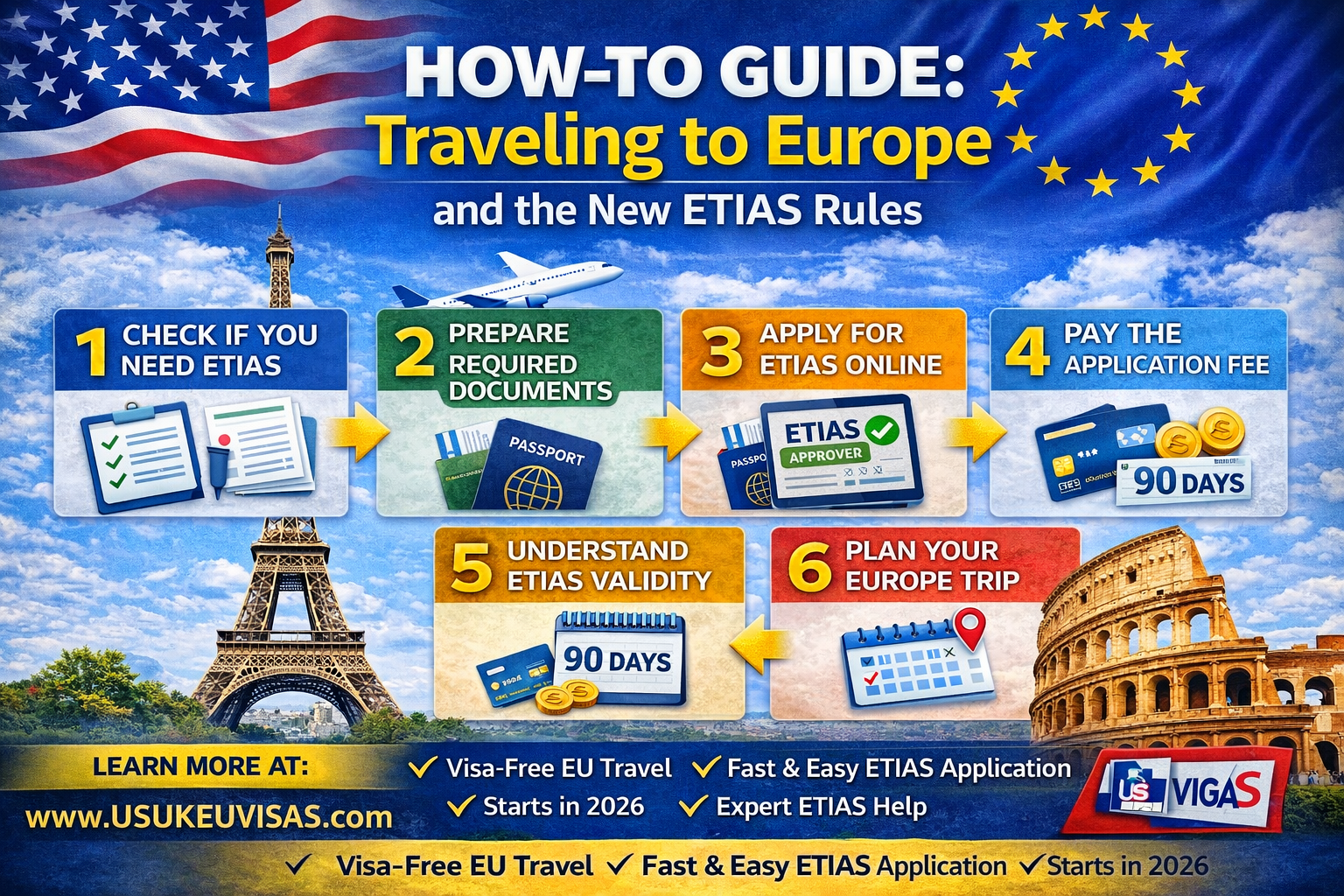
- How-To Guide: Traveling to Europe and the new ETIAS rules
-
Author: usukeuvisa
-
20 Mar 2026

How-To Guide: Traveling to Europe and the new ETIAS rules
Traveling to Europe has always been a dream for millions of tourists worldwide. From historic cities to breathtaking landscapes, Europe offers an unforgettable experience. However, with the introduction of new travel regulations like ETIAS (European Travel Information and Authorisation System), planning your trip now requires a bit more preparation.
This step-by-step guide will help you understand the new ETIAS rules and how to travel to Europe smoothly in 2026 and beyond.
What is ETIAS and Why It Matters?
ETIAS is a new travel authorization system introduced by the European Union for visitors from visa-exempt countries. While it is not a visa, it is a mandatory pre-travel approval required before entering most European countries.
The main goal of ETIAS is to improve border security while making travel more efficient. It allows authorities to screen travelers before they arrive, reducing risks and speeding up entry processes.
If you’re from countries like the United States, United Kingdom, Canada, or Australia, you will need ETIAS before traveling to Europe.
Step 1: Check If You Need ETIAS
Before planning your trip, confirm whether you need ETIAS.
You will need ETIAS if:
-
You are from a visa-exempt country
-
You plan to visit Europe for tourism, business, or transit
-
Your stay is 90 days or less within a 180-day period
If you already require a Schengen visa, ETIAS does not apply to you.
Step 2: Prepare Required Documents
Applying for ETIAS is simple, but you must have the right documents ready:
-
A valid passport (issued within the last 10 years)
-
Email address
-
Debit or credit card for payment
-
Basic travel and personal information
Make sure your passport is valid for at least 3 months beyond your departure date from Europe.
Step 3: Apply for ETIAS Online
The ETIAS application process is entirely online and takes only a few minutes.
Application Process:
-
Visit the official ETIAS website
-
Fill out the application form
-
Provide personal and passport details
-
Answer security and health-related questions
-
Pay the application fee
Most applications are approved within minutes, but some may take a few days if additional checks are required.
Step 4: Pay the ETIAS Fee
The ETIAS application fee is expected to be around €20.
However, certain travelers may be exempt from paying the fee:
-
Children under 18
-
Adults over 70
Once approved, your ETIAS authorization will be electronically linked to your passport.
Step 5: Understand ETIAS Validity
An approved ETIAS authorization is:
-
Valid for up to 3 years (or until passport expiry)
-
Allows multiple entries into Europe
-
Permits stays of up to 90 days within 180 days
This means you can travel freely across participating European countries without reapplying each time.
Step 6: Plan Your Travel to Europe
Once your ETIAS is approved, you can proceed with travel planning.
Key Tips:
-
Book flights and accommodation early
-
Plan your itinerary across Schengen countries
-
Ensure travel insurance coverage
-
Keep digital and printed copies of documents
ETIAS does not guarantee entry—border officials still have the final say—so ensure all your travel details are accurate.
Step 7: Arriving in Europe
When you arrive in Europe:
-
Present your passport (linked to ETIAS)
-
Answer basic questions from border officers
-
Provide proof of return ticket and accommodation if asked
The process is expected to be faster thanks to pre-screening through ETIAS.
ETIAS vs Schengen Visa: What’s the Difference?
Many travelers confuse ETIAS with a visa, but they are different.
| ETIAS | Schengen Visa |
|---|---|
| For visa-exempt travelers | For travelers who require a visa |
| Online process | Embassy-based application |
| Fast approval | Longer processing time |
| Lower cost | Higher cost |
If your country requires a visa, you must still apply for a Schengen visa.
Common Mistakes to Avoid
To ensure a smooth journey, avoid these mistakes:
-
Applying at the last minute
-
Entering incorrect passport details
-
Using unofficial or fake websites
-
Overstaying the 90-day limit
-
Ignoring passport validity rules
Planning ahead will save you from unnecessary travel stress.
Benefits of ETIAS for Travelers
While ETIAS adds an extra step, it also brings several advantages:
-
Faster border checks
-
Improved safety across Europe
-
Reduced immigration delays
-
Better travel planning
It is part of a global trend toward smarter and more secure travel systems.
Future of Travel in Europe
ETIAS will work alongside the Entry/Exit System (EES), another EU initiative that digitally records travelers entering and leaving Europe.
Together, these systems will:
-
Replace manual passport stamping
-
Improve border control efficiency
-
Enhance traveler tracking
This marks a major shift toward digital travel management in Europe.
Final Thoughts
Traveling to Europe in 2026 and beyond will be slightly different with the introduction of ETIAS, but the process is simple and user-friendly.
By following this step-by-step guide, you can ensure a hassle-free journey and focus on enjoying your European adventure.
Whether you’re exploring Paris, Rome, or Amsterdam, being prepared with ETIAS will make your travel smoother and stress-free.
Need Help with ETIAS or European Travel?
At US UK EU Visas, we specialize in helping travelers understand new regulations like ETIAS, visa requirements, and travel documentation.
Let us guide you through the process so you can travel confidently and without delays.