
ETIAS: what it is, who needs it and how it affects travel to Spain
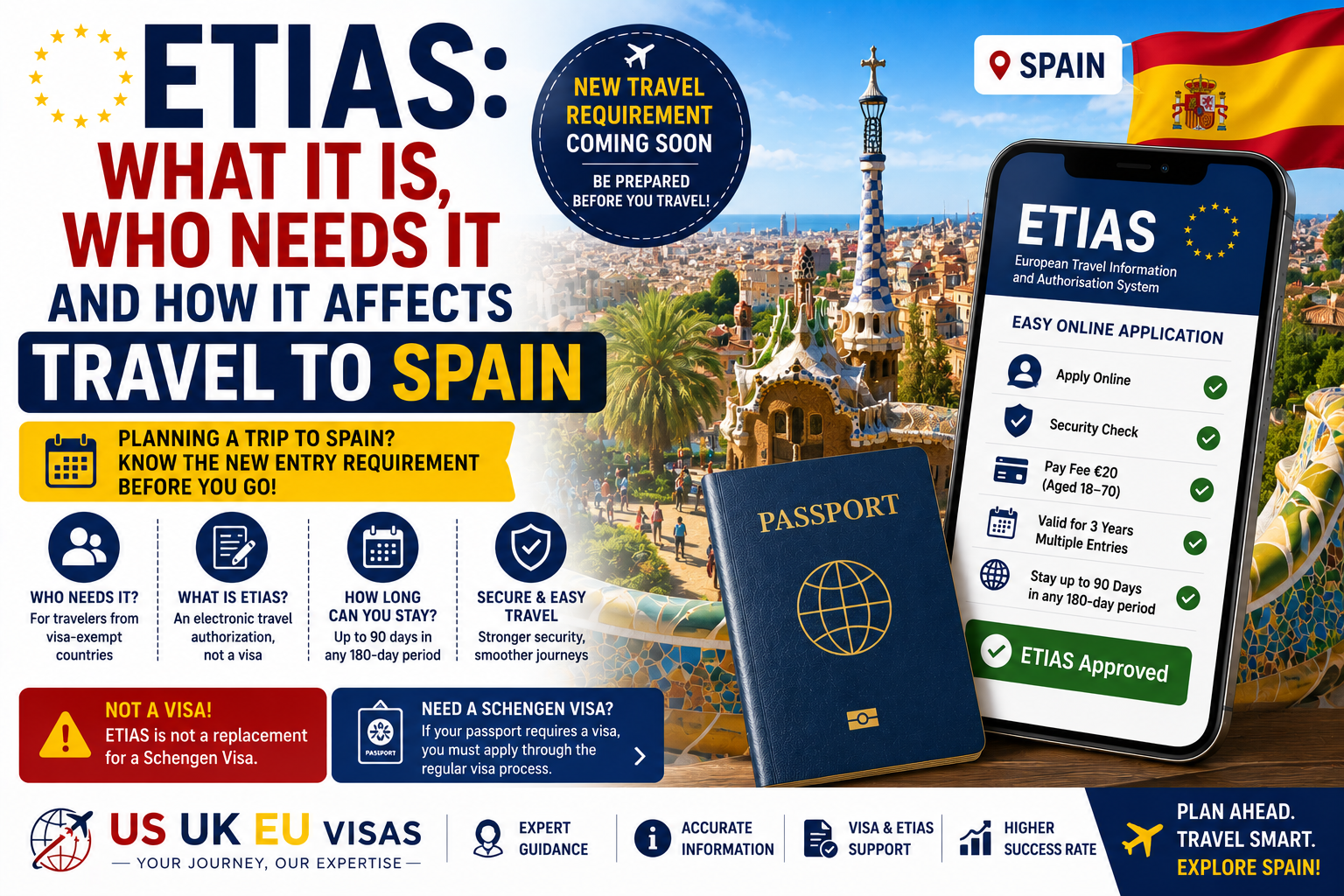
- who needs it and how it affects travel to Spain
-
Author: usukeuvisa
-
19 Jul 2026

ETIAS: what it is, who needs it and how it affects travel to Spain
Spain has long been one of Europe’s most popular travel destinations, attracting millions of visitors each year with its vibrant cities, beautiful beaches, historic landmarks, and world-famous cuisine. Whether you’re planning to explore Barcelona, relax along the Costa del Sol, or discover the cultural treasures of Madrid and Seville, it’s important to understand the latest entry requirements before you travel.
One of the biggest changes for visa-free travelers is the introduction of the European Travel Information and Authorisation System (ETIAS). Although ETIAS is not a visa, it will become a mandatory travel authorization for eligible visitors entering Spain and other participating European countries.
In this guide, we’ll explain what ETIAS is, who needs it, how it affects travel to Spain, and what travelers should know before planning their next European adventure.
What Is ETIAS?
The European Travel Information and Authorisation System (ETIAS) is an electronic travel authorization created by the European Union to improve border security while maintaining visa-free travel for eligible visitors.
It works similarly to:
- U.S. ESTA
- UK ETA
- Canadian eTA
ETIAS allows authorities to conduct security and identity checks before travelers arrive in Europe. It is not a visa and only applies to travelers who already qualify for visa-free entry into participating European countries. The authorization is linked electronically to the traveler’s passport.
Does Spain Require ETIAS?
Yes.
Spain is a member of the Schengen Area and participates in the ETIAS program.
Once ETIAS becomes operational, eligible travelers from visa-exempt countries must obtain an approved ETIAS before boarding transportation to Spain.
Without a valid ETIAS, airlines and other carriers may deny boarding, even if the traveler would otherwise qualify for visa-free entry.
Who Needs ETIAS for Spain?
ETIAS applies only to travelers from countries that currently enjoy visa-free access to the Schengen Area.
Examples include citizens of:
- United States
- Canada
- United Kingdom
- Australia
- Japan
- South Korea
- Singapore
- New Zealand
These travelers can continue visiting Spain without obtaining a traditional visa but will need an approved ETIAS authorization before departure.
Do Indian Citizens Need ETIAS?
Most Indian passport holders do not qualify for ETIAS because they require a Schengen Visa to enter Spain.
If you’re traveling with an Indian passport, you must continue following the standard Schengen Visa application process through the appropriate Spanish embassy, consulate, or visa application centre.
However, if you hold dual nationality and travel using a passport from a visa-exempt country, you may qualify for ETIAS instead.
ETIAS Is Not a Spain Visa
Many travelers mistakenly believe ETIAS replaces the Schengen Visa.
It does not.
Here’s the difference:
ETIAS
- Electronic travel authorization
- For visa-exempt travelers
- Fully online application
- Short visits only
Schengen Visa
- Traditional visa
- Required for travelers whose nationality requires one
- Application through an embassy or visa centre
- May require supporting documents and biometrics
Knowing which document you need before booking your trip is essential.
How Long Can You Stay in Spain with ETIAS?
ETIAS permits eligible travelers to stay:
Up to 90 days within any 180-day period
This includes travel for:
- Tourism
- Business meetings
- Family visits
- Short-term study
- Transit
The 90-day limit applies across the entire Schengen Area, not just Spain.
How to Apply for ETIAS
Once the system officially launches, applications will be completed online through the official European Union ETIAS website or mobile application.
Step 1: Complete the Online Application
Applicants provide:
- Passport details
- Personal information
- Email address
- Contact details
Step 2: Answer Security Questions
Questions relate to:
- Criminal history
- Immigration violations
- Security concerns
- Certain health declarations where applicable
Step 3: Pay the Application Fee
The standard ETIAS application fee is €20 for applicants aged 18 to 70.
Children under 18, adults over 70, and certain exempt applicants do not pay the fee but still require ETIAS authorization.
Step 4: Receive Approval
Most applications are expected to be processed within minutes, although some may require additional review.
Travelers should apply before finalizing their departure plans.
Required Documents
ETIAS applications require very little documentation.
Applicants generally need:
- A valid passport
- A working email address
- A debit or credit card for payment (if applicable)
Unlike a Schengen Visa, travelers are not usually required to attend an embassy appointment or submit biometric data specifically for ETIAS.
When Will ETIAS Affect Travel to Spain?
Although ETIAS has been approved, the European Union has announced that it will become operational only after related border management systems are fully implemented.
Travelers cannot currently submit ETIAS applications. The EU will announce the official launch date before the system begins accepting applications.
If you’re planning travel to Spain, it’s a good idea to monitor official announcements and avoid unofficial websites claiming to process ETIAS applications before the system opens.
Tips for Visiting Spain
Before traveling to Spain:
- Confirm whether your nationality requires ETIAS or a Schengen Visa.
- Check that your passport meets validity requirements.
- Apply through official EU channels once ETIAS applications open.
- Keep copies of your travel documents.
- Purchase comprehensive travel insurance.
- Book accommodation and transportation in advance, especially during peak tourist seasons.
Planning ahead can make your arrival in Spain much smoother.
Why Choose US UK EU Visas?
Travel regulations continue to evolve, and understanding whether you need ETIAS or a Schengen Visa can be confusing.
At US UK EU Visas, our experienced consultants help travelers:
- Determine the correct travel authorization
- Prepare Schengen Visa applications
- Understand ETIAS eligibility
- Organize supporting documents
- Stay updated on the latest immigration requirements
Whether you’re planning a holiday in Spain, a business trip, or a family visit, we’re here to make the application process simple and stress-free.
Final Thoughts
Spain remains one of Europe’s most exciting destinations, and ETIAS is an important update for travelers who currently enjoy visa-free access. While ETIAS introduces an additional pre-travel authorization step, it is designed to make border security stronger without replacing visa-free travel.
If you’re eligible, applying for ETIAS before your trip will become an essential part of your travel preparations. If you require a Schengen Visa, remember that ETIAS does not replace the traditional visa process.
Understanding these requirements in advance will help ensure your journey to Spain is smooth, enjoyable, and free from unnecessary travel disruptions.