
Reading the ETIAS site to figure out how & when to get a Travel Visa for a 90 day visit this spring
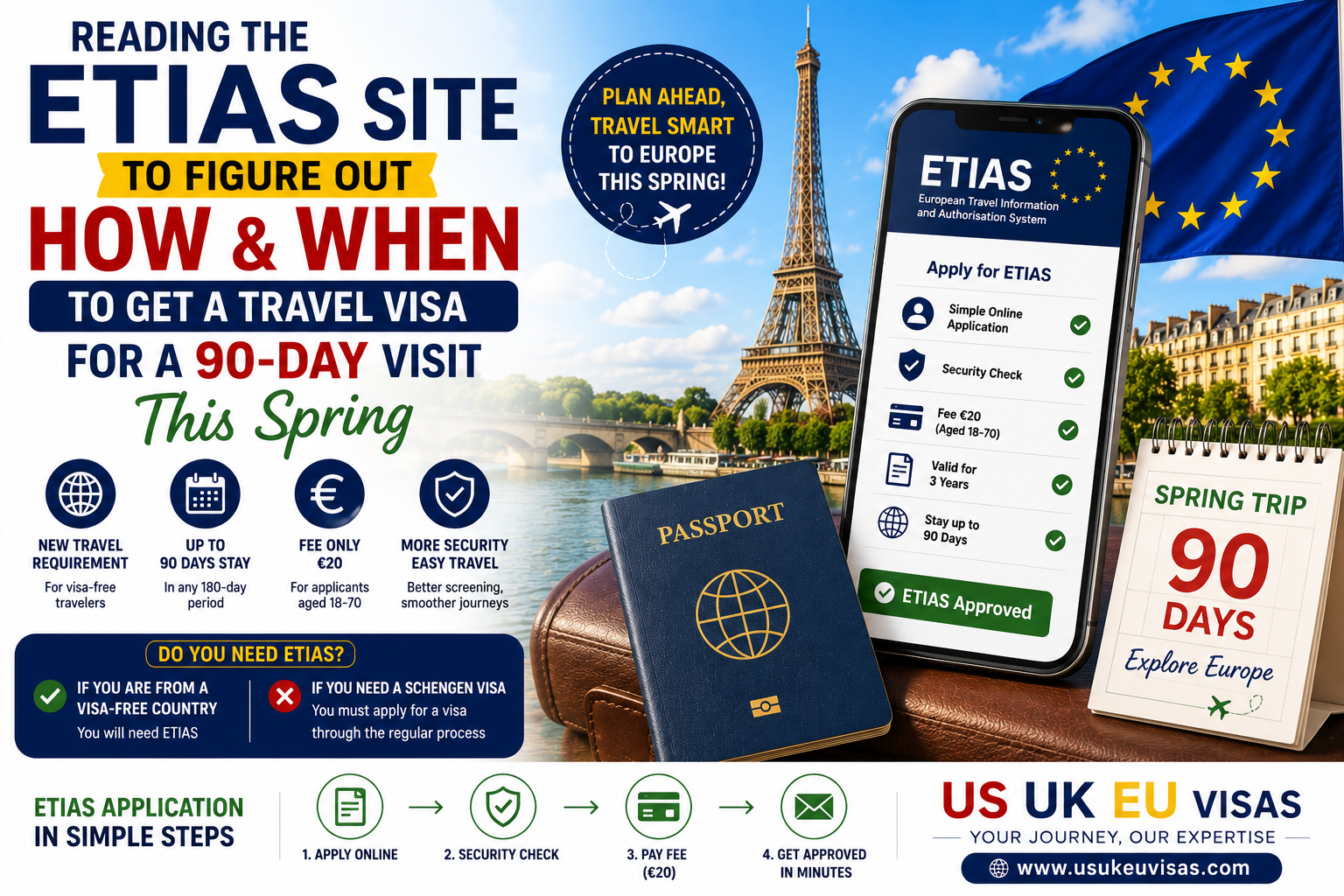
- Reading the ETIAS site to figure out how & when to get a Travel Visa for a 90 day visit this spring
-
Author: usukeuvisa
-
19 Jul 2026

Reading the ETIAS site to figure out how & when to get a Travel Visa for a 90 day visit this spring
Planning a spring getaway to Europe? If you’ve been researching entry requirements, you’ve probably come across the European Union’s ETIAS (European Travel Information and Authorisation System). Many travelers visiting the official ETIAS website have one common question:
“Do I need ETIAS or a travel visa for my 90-day trip?”
The answer depends on your nationality. ETIAS is not a visa—it’s a travel authorization for people who already qualify for visa-free entry into many European countries. Travelers who require a Schengen Visa must continue applying for a visa through the traditional process.
This guide explains what the ETIAS website tells you, who needs ETIAS, who still needs a Schengen Visa, and how to prepare for a 90-day visit to Europe.
What Is ETIAS?
ETIAS (European Travel Information and Authorisation System) is an electronic pre-travel authorization introduced by the European Union for travelers from visa-exempt countries.
Its goals include:
- Strengthening border security
- Screening travelers before arrival
- Improving immigration management
- Making border crossings more efficient
Unlike a traditional visa, ETIAS is completed entirely online before departure. It is linked electronically to your passport and does not replace border checks upon arrival.
ETIAS Is Not a Travel Visa
One of the biggest misconceptions is that ETIAS is a European travel visa.
It is not.
If you already travel to Europe without a visa (for example, if you hold a U.S., Canadian, Australian, or UK passport), ETIAS will become an additional travel authorization requirement once it is operational.
If your nationality requires a Schengen Visa—such as most Indian passport holders—you must still apply for a visa through the normal embassy or visa application centre process. ETIAS does not replace the Schengen Visa.
Can You Stay for 90 Days?
Yes.
A valid ETIAS allows eligible travelers to visit participating European countries for:
- Tourism
- Business
- Visiting family or friends
- Short-term study
- Transit
The maximum permitted stay is:
Up to 90 days within any rolling 180-day period.
This rule already applies to visa-free visitors and will continue under ETIAS.
Who Needs ETIAS?
ETIAS applies to travelers from visa-exempt countries.
Examples include citizens of:
- United States
- Canada
- United Kingdom
- Australia
- Japan
- South Korea
- New Zealand
- Singapore
These travelers will need ETIAS before boarding transport to participating European countries once the system becomes operational.
What About Indian Travelers?
If you’re traveling with an Indian passport, the ETIAS website may seem confusing at first.
The key point is:
Most Indian citizens still require a Schengen Visa.
This means:
- You do not apply for ETIAS.
- You must complete the regular Schengen Visa application.
- ETIAS only applies to travelers who already have visa-free access.
However, if an Indian traveler also holds a passport from a visa-exempt country, they may qualify for ETIAS depending on which passport they use for travel.
How Do You Apply for ETIAS?
Once ETIAS becomes operational, eligible travelers will be able to apply online through the official EU ETIAS website or official mobile app.
The process includes:
Step 1: Complete the Online Form
Applicants provide:
- Passport details
- Personal information
- Email address
- Travel information
Step 2: Answer Security Questions
Questions may cover:
- Criminal convictions
- Previous immigration violations
- Travel to conflict areas
- Certain security matters
Step 3: Pay the Application Fee
The standard ETIAS application fee is €20 for applicants aged 18–70.
Applicants under 18, over 70, and certain exempt categories do not pay the fee but still require travel authorization.
Step 4: Receive Your Authorization
Most applications are expected to be approved within minutes, although some may require additional checks or manual review. Travelers are encouraged to apply before finalizing travel plans.
Is ETIAS Available Now?
This is one of the most searched questions online.
At the time of writing, ETIAS is not yet operational, and travelers cannot submit applications. The European Union has stated that the official launch date will be announced several months in advance. Recent reports indicate that implementation has been delayed while related border systems are finalized.
Always rely on the official ETIAS website for announcements and avoid unofficial websites claiming to sell ETIAS authorizations before the system opens.
Documents You’ll Need
For an ETIAS application, eligible travelers generally need:
- A valid passport
- An email address
- A debit or credit card for payment (if applicable)
Your passport should typically:
- Be less than 10 years old.
- Remain valid for at least three months beyond your planned departure from Europe.
ETIAS vs. Schengen Visa
| ETIAS | Schengen Visa |
|---|---|
| Travel authorization | Traditional visa |
| For visa-free travelers | For travelers who require visas |
| Online application | Embassy or visa centre application |
| €20 fee (eligible applicants) | Visa fees vary |
| Short stays up to 90 days | Subject to visa conditions |
Understanding the difference helps ensure you apply for the correct travel document.
Tips for Spring Travel
If you’re planning a European vacation next spring:
- Check whether your nationality requires ETIAS or a Schengen Visa.
- Verify your passport validity well in advance.
- Follow official EU updates regarding ETIAS implementation.
- Apply as early as possible once applications become available.
- Avoid unofficial ETIAS websites that charge unnecessary service fees.
Why Choose US UK EU Visas?
Navigating changing international travel requirements can be confusing, especially with new systems like ETIAS.
At US UK EU Visas, we help travelers:
- Determine whether they need ETIAS or a Schengen Visa
- Prepare complete visa applications
- Understand the latest travel rules
- Avoid common documentation mistakes
- Receive expert guidance throughout the process
Whether you’re planning a European holiday, studying abroad, or traveling for business, our experienced consultants are here to help.
Final Thoughts
The ETIAS system is an important change for visa-free travel to Europe, but it is not a replacement for the Schengen Visa. If you’re planning a 90-day visit this spring, the first step is determining whether your nationality qualifies for ETIAS or requires a visa.
By reading the official ETIAS guidance, preparing your documents early, and staying informed about the latest implementation timeline, you can avoid unnecessary stress and enjoy a smooth journey to Europe.
When in doubt, seek professional guidance to ensure you have the correct travel authorization before you depart.