
Want to apply for USA visa in 2026? – Updated step by step guide for using the NEW VISA PORTAL
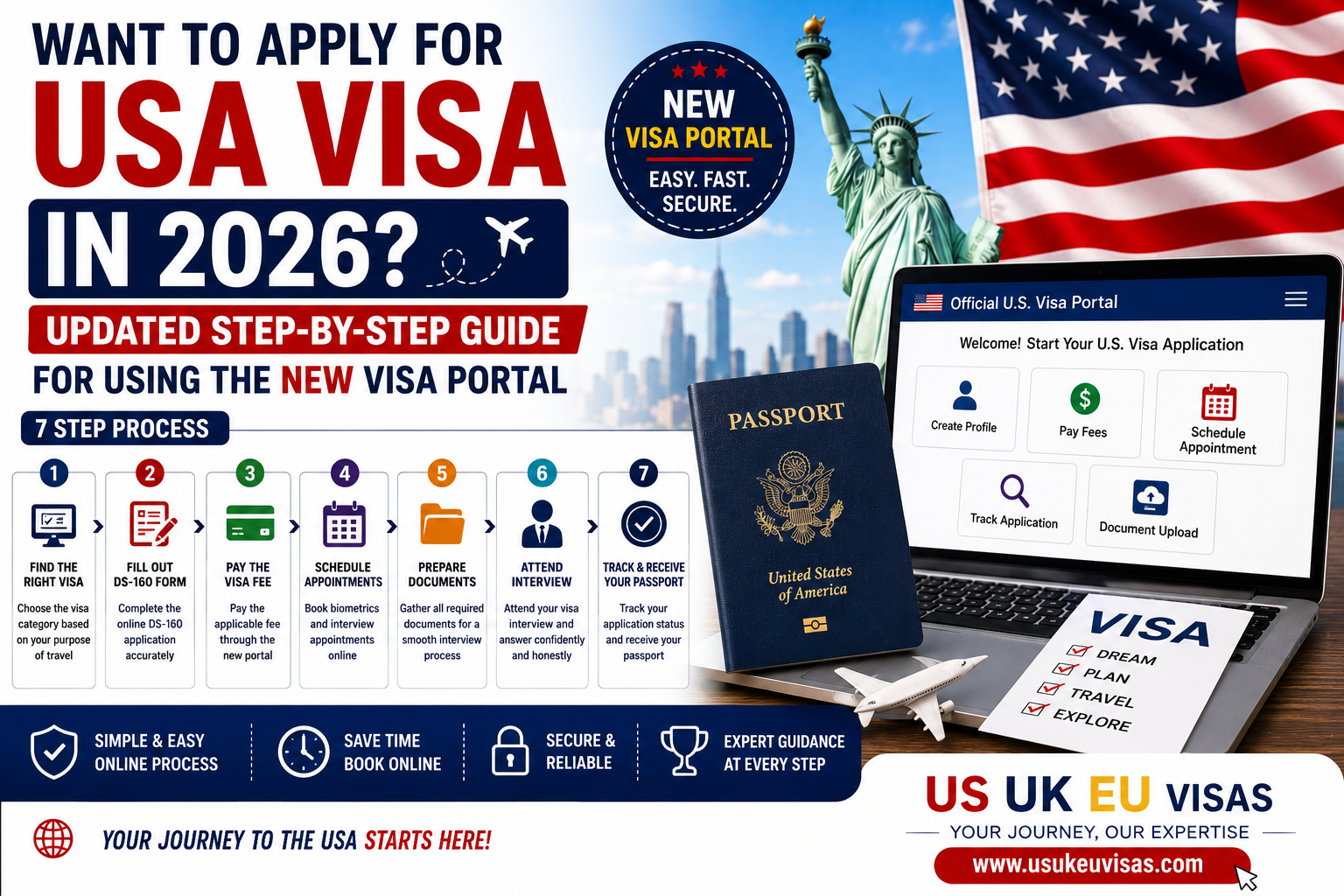
- Want to apply for USA visa in 2026? - Updated step by step guide for using the NEW VISA PORTAL
-
Author: usukeuvisa
-
23 Jun 2026

Want to apply for USA visa in 2026? – Updated step by step guide for using the NEW VISA PORTAL
The United States remains one of the world’s most popular destinations for tourism, higher education, business opportunities, and family visits. Every year, millions of travelers apply for U.S. visas to visit iconic cities, attend prestigious universities, explore career opportunities, and reconnect with loved ones.
If you’re planning to apply for a U.S. visa in 2026, it’s important to understand the latest application process and how to use the new visa scheduling portal. The U.S. visa application process has become increasingly digital, requiring applicants to complete online forms, create scheduling profiles, pay visa fees, and book appointments electronically. The U.S. Department of State continues to use online systems for DS-160 submissions and appointment scheduling for nonimmigrant visa applicants.
This updated guide explains everything you need to know about applying for a U.S. visa in 2026 using the new visa portal.
Who Needs a U.S. Visa?
Most foreign nationals require a visa to travel to the United States.
Common reasons for applying include:
- Tourism and holidays
- Visiting family and friends
- Business meetings and conferences
- Studying in the United States
- Employment opportunities
- Medical treatment
- Exchange programs
The first step is identifying the correct visa category based on your travel purpose.
Common U.S. Visa Types
B1/B2 Visitor Visa
Suitable for:
- Tourism
- Family visits
- Business meetings
- Medical treatment
F-1 Student Visa
Suitable for:
- University education
- Academic programs
- Language courses
J-1 Exchange Visitor Visa
Suitable for:
- Cultural exchange programs
- Research programs
- Training opportunities
H-1B Work Visa
Suitable for:
- Skilled professionals
- Specialized employment opportunities
Choosing the right visa category is essential because requirements vary by visa type.
Step 1: Complete Form DS-160 Online
The DS-160 is the official online nonimmigrant visa application form and serves as the first step for most U.S. visa applicants. The application is submitted electronically through the Consular Electronic Application Center (CEAC).
The form generally requests:
- Personal information
- Passport details
- Employment history
- Educational background
- Family information
- Travel history
- Purpose of travel
The online application usually takes around 90 minutes to complete. After submission, you’ll receive a confirmation page with a barcode, which you must save and print.
Tips:
- Ensure your passport information is accurate.
- Double-check dates and spellings.
- Save your application ID.
- Print the DS-160 confirmation page.
Even small errors may create delays later.
Step 2: Create an Account on the New Visa Portal
After completing the DS-160, the next step is creating your profile on the U.S. visa scheduling portal.
The portal allows applicants to:
- Create their visa profile
- Pay visa fees
- Schedule biometrics appointments
- Book visa interviews
- Track application progress
- Manage appointments
The appointment scheduling system has been updated in recent years and requires applicants to create online profiles before booking appointments.
Keep the following information ready:
- Passport
- DS-160 confirmation number
- Email address
- Phone number
- Personal details
Step 3: Pay the Visa Application Fee
Once your profile is created, you’ll need to pay the applicable visa fee.
For many nonimmigrant visas, including the B1/B2 Visitor Visa and F-1 Student Visa, the Machine Readable Visa (MRV) fee is approximately US$185. (–)
Always keep:
- Payment receipt
- Transaction reference number
- Payment confirmation
These details will be needed during appointment scheduling.
Step 4: Schedule Your Appointments
Using the new visa portal, applicants generally schedule two appointments:
Biometrics Appointment (VAC/OFC)
This appointment includes:
- Fingerprints
- Digital photograph
- Identity verification
Consular Interview Appointment
The interview takes place at a U.S. Embassy or Consulate.
Applicants schedule appointments themselves after completing the DS-160 and paying the visa fee.
Appointment availability depends on:
- Visa category
- Embassy workload
- Seasonal demand
- Local processing capacity
Applying early is highly recommended.
Step 5: Gather Required Documents
Preparing documents carefully can significantly improve your application experience.
Essential Documents Include:
Valid Passport
Your passport should generally remain valid beyond your intended travel period.
DS-160 Confirmation Page
Printed barcode confirmation.
Appointment Confirmation
Printed appointment details.
Visa Fee Receipt
Payment confirmation.
Passport Photographs
As per U.S. visa specifications.
Financial Documents
Examples include:
- Bank statements
- Salary slips
- Income tax returns
- Sponsorship documents
Employment or Educational Documents
Examples include:
- Employment letters
- Student admission letters
- Business registration certificates
Travel Information
Examples include:
- Proposed itinerary
- Accommodation details
- Invitation letters
Organized documentation helps create a smoother interview process.
Step 6: Attend Biometrics and Visa Interview
The visa interview is often the most important stage of the process.
A consular officer may ask questions regarding:
- Purpose of travel
- Employment status
- Financial circumstances
- Family situation
- Previous international travel
- Future plans
Interview Tips:
- Arrive early.
- Dress professionally.
- Answer honestly.
- Keep responses simple and clear.
- Carry all required documents.
Visa officers primarily want to determine whether you qualify under the chosen visa category and intend to comply with U.S. immigration rules.
Step 7: Track Your Application and Receive Your Passport
After your interview, your application enters processing.
Possible outcomes include:
Visa Approved
Your passport is retained temporarily for visa stamping.
Administrative Processing
Additional review may be required.
Visa Refused
The officer will explain the applicable section of law.
Applicants can monitor application status and manage appointments through online systems provided by the U.S. Department of State and embassy scheduling platforms.
Common Mistakes to Avoid
Many visa applications encounter problems due to simple mistakes.
Avoid:
- Incorrect DS-160 information
- Incomplete documentation
- Missing appointments
- Insufficient financial evidence
- Inconsistent answers
- Providing false information
Careful preparation significantly improves your chances of approval.
Tips for Faster Processing in 2026
Start Early
Begin the process several months before your planned travel date.
Complete DS-160 Carefully
Review all information thoroughly.
Monitor Appointment Availability
Check the scheduling portal regularly.
Organize Documents
Keep paperwork properly arranged.
Maintain Financial Stability
Provide genuine and consistent financial records.
Seek Professional Guidance
Expert assistance can help simplify complicated cases.
Why Use Professional Visa Assistance?
For many first-time applicants, the U.S. visa process can feel overwhelming.
Professional visa consultants can help:
- Determine the correct visa category
- Review documents
- Assist with DS-160 preparation
- Guide appointment scheduling
- Prepare for interviews
- Reduce mistakes and delays
At US UK EU Visas, we provide end-to-end assistance for U.S., UK, and Europe visa applications, helping applicants confidently navigate the latest visa procedures.
Final Thoughts
Applying for a U.S. visa in 2026 has become increasingly streamlined through online systems and the new visa scheduling portal. By following the correct steps—completing the DS-160, creating your portal account, paying fees, booking appointments, preparing documents, attending interviews, and tracking your application—you can navigate the process with confidence.
Whether you’re traveling to the United States for tourism, education, business, or family reasons, proper preparation remains the key to a successful visa application.